Showing posts with label Trane. Show all posts

Friday, August 16, 2013

HVAC Cost Reality Check

       Probably the most common question I get in the heating and cooling business, is, how much does a air conditioner or furnace cost? Most folks are surprised at how expensive a new heating or cooling system can be. The reason for their surprise is most likely due to the fact that they have never had to purchase a new unit, or system in their life. People today are so mobile that every few years we move to a different city or home, and there is already a working HVAC system installed.
     I know that here in the Boise, Idaho area in the past 10 years we have had a phenomenal growth spurt in new housing, so there are many fairly new systems installed already. So, you have been in your home 15-20 years old, it is time to replace your HVAC system. You call around and arrange to have someone call on you, and evaluate your needs and give you a proposal for new equipment. That is when the shock comes! The cost! Most folks have no idea. Well, allow me to give you a reality check and bring you up to date.

     The most popular size of Air Conditioner here in the Treasure Valley, is a 2.5 ton unit. That is what most homes that are 1500-1700 square feet will need. That air conditioner will cost, installed, on average $2800.00 to $7000.00. The huge spread is determined by what EFFICIENCY you want to purchase. Efficiency ranges from a rating of 13-20 SEER, for most central air systems. (kind of like miles per gallon on a car). Back in the day you could only choose from one or two efficiency models from any dealer because that is all they had.
      On the furnace side, most people who have a 20 year old home most likely have a 80% efficiency furnace installed and today you can get a much more efficient 95% furnace installed in that same house size mentioned earlier, for $3000.00 to 6500.00. Now, I will mention that right now you can still replace your old furnace with a 80% efficient model just like you have, and they are less money, but it really is not a good idea. If your going to spend the money, why not upgrade to a more efficient model.
     Now, do the math. a complete system will cost between $6300.00 and $13,500.00. Now, here's what I want you to think about: Most people will spend $20,000-30,000. for a brand new car. They spend maybe an hour or two a day in their car traveling to work, shopping, etc. Most folks keep their automobile on average about 7-8 years.  When you purchase a new HVAC system, it is half the cost of a new car and you spend about 15 hours a day in you home, plus you won't be replacing it for 15 to 20 years. When you just look at the money side of the issue, which is the better investment, and which is going to give you the greatest return on your investment? For more good information read my blogs at www.hvaccomfortguyjerry.blogspot.com. or go to our website at www.greensheating.com.

Monday, August 12, 2013

Indoor Air Quality and You - Part 2

     Let's talk about residential air cleaning systems, and how effective they are. Like most areas of the country, here in the Boise, Idaho area we have a goodly share of dust and allergens to condtend with. Not all indoor air cleaners are alike. Air cleaners are generally purchased to remove particulate like dust, smoke, allergens and spores from the air. Some remove just very large visible particles. Others are effective on allergen-sized particles. Now because of technology, some air cleaners can clean all the way down to virus-sized particles, like influenza virus, even the Swine Flue virus.
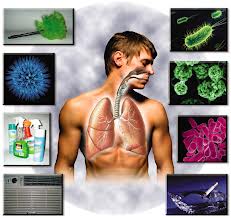
     What goes in and  gets trapped in our bodies? In the upper respiratory tract (nasal passages and pharynx) we find mold, spores, pollen, and dust mites. In the middle respiratory tract, (trachea and bronchi, aka lungs) We find smaller particles like bacteria, pet dander, small mold spores and dust. In the lower respiratory tract, (deepest part of our lungs) we find particles of 0.1 micron size. These are tobacco smoke, small bacteria and virus. Also microscopic outdoor dust particles. The bad news is, that the reaction of our body to these particles ranges from 'none' to 'extreme', like in the case of an asthma attack.
      So, the point is, the measure of the air cleaner's performance is the percentage of particles removed from the air. Only air cleaners designed to clean the air down to particles of 0.1 microns, and do it consistently, are the only type you should consider if you or your family suffers from allergies, asthma, etc. Standard furnace filters are flat, fibrous filters that are only designed to trap the very largest of particles. It's readily seen when you pull them out to change them. Really, in a sense, they are there to protect your furnace from dirt and debris, NOT to protect you and your loved ones.

     Next blog I will share information on HEPA filters, media filters, and other important health concerns. In the meantime read my other blogs at www.hvaccomfortguyjerry.blogspot.com or you can visit our website at www.greensheating.com.

Friday, August 9, 2013

Indoor Air Quality and You

     Air is absolutely essential for life. The problem is that the purity of the air is not assured. Outdoor air pollution is pretty obvious, but indoor pollution is not always so readily noticed. The impurities found in homes can build to levels that have a direct effect on our health and quality of life. One report from 2007,  based on independent testing of the air in 10,000 American homes across the country, that 96% had a least one type of indoor air quality or IAQ.
     What does this mean to you? When allergy problems send people to the doctor, invariably the patient asks about about air filtration. Patients want to know what they can do to reduce the pollutants in their homes. Many ask about air cleaners and doctors are telling them that air filtration should be part of their comprehensive health strategy.
     To help you understand about air filtration for your home, there are three approaches to improve air quality.  They involve, Source elimination, Ventilation, and Air Cleaning.
     Source Elimination is just as implied. Doing things in your home to reduce or remove the source of pollutants. Examples would be, not smoking indoors and removing animals, plants and solvents from your home.
     Ventilation is critical, especially in newer homes. New construction methods utilize energy efficient window and doors, extra caulking and weather stripping, along with more insulation. The problem created is, that tighter construction means decreased movement of outside air through the home. The lack of ventilation leads to a build up of stale and dirty air. According to the EPA, the lack of air movement throughout homes can lead to concentrations of pollutants up to a hundred times greater inside a home than outside.

     Air Cleaning by the use of filters and or whole house filtration systems are a vital part of the strategy in improving your overall health. These cleaners remove the particulate matter that remains AFTER source elimination, and ventilation have failed. Some whole house electronic air cleaners can capture particles as small as .01 microns. That is pollutants like influenza, and other bacteria. Because they are part of your heating and cooling system they clean the air in your entire home.
     As time goes on I will share more things about indoor air quality. You can read more of my blogs at www.hvaccomfortguyjerry.blogspot.com, or go to our website at www.greensheating.com.

Tuesday, August 6, 2013

There Are No Free Rides - Really!

     It is sad that we live in a time and economy that we are careful about every dollar we have and at the same time squander money by not being smart about our homes and appliances. A case in point is regarding Service Calls made at our request and then trying to figure out a way not to pay them. Yes, we do not want to pay more than we should, but we don't want to squander money on poor, or NO service.
    Recently we had two experiences here in Boise that demonstrate peoples total lack of regard for a company. THEY, the home owner, called to have a service tech come out and diagnose what was wrong with their air conditioner and why it wasn't cooling.

     In one instance, the problem was a simple wiring issue, that the tech fixed. The company charged the homeowner for a service/diagnostic call, and for a "level one" minor repair. The home owner was furious because he expected the tech to show him how to fix the problem himself, and because it took very little time to repair, didn't want to pay for the call.
     Come on folks! Who does not expect to pay for a Tech just to show up, let alone pay for the service rendered? Lets face it, the company the tech works for has to pay him, and has to pay for gas, a truck, wear and tear on the truck, Workman's Compensation insurance, uniforms, tools, and equipment to make the diagnosis and repair, plus, etc, etc,. There are no free rides, really!!  Everyone in the service industry has a  fee for a service call and that does not include a fee for the repair, no matter how minor. 

I know we live in tough times, but sometimes we have to bite the bullet and have a professional service tech to our homes for repairs of all descriptions. Personally, @comfortguyjerry has had service men come out to repair my clothes dryer, my garage door, my sprinkler system, my refrigerator, and by the way, we chose not to repair the refrigerator but I still had to pay for the service call of $89.00. That's just the way it is in the real world. Read more of my blogs at www.hvaccomforguyjerry.blogspot.com.

Monday, July 29, 2013

Breathe Easy With Clean Air At Home

     More and more we are hearing about the importance of clean air in our homes. Part of the work of the Environmental Protection Agency (EPA) is to promote and insure clean air in our homes, cities, and states. It is a well known fact that often there are more pollutants IN our homes, than those outside our homes. It is also well known that millions of people suffer daily with asthma, pulmonary lung disease, allergies, hay fever, and reactions to mold, mildew and dust. What is a person to do to have clean air in their homes?

     We can't live in a bubble, so the best thing we can do is to first, eliminate as many of the products from our homes that cause irritation to our lungs. Things like perfumes, chemical cleaning compounds, pesticides, and the like. Even carpet can be a host home for many airborne allergens and dust. Personally, I like carpet. Living in the Boise, Treasure Valley of Idaho, carpet feels really nice on a cold winter morning. So for me, getting rid of my carpet is not going to work. In the summer we live outdoors as much as we do indoors so the doors are being opened and closed and that allows more pollutants into our home.
     What I can suggest, and what I am using, is a 'whole home' electronic air cleaner.
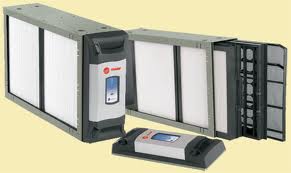
These units install right in the return air duct of your central heating and cooling system. There are some units on the market like, Trane CleanEffects, that will purify the air down to .01 microns. This will scrub the air of 99.98% of mold, mildew, influenza, allergens and the like.
     A good air purifier should be at least a three stage system, including a pre-filter that will pick up most dust, lint, pet hair, & etc. The second stage is usually the electronic part in which the atoms are changed to attract pollen and other allergens. The third stage generally consists of specially manufactured filter material that filter out the microscopic bacteria and dangerous influenza. At the same time as these filters are working, your system delivers clean, purified air to your home. A quality system like Trane CleanEffects does not require purchasing new filters for up to ten years. The filters can be vacuumed, washed, and replaced.
     Some folks like to use small portable air cleaners but, frankly, these do not perform as well as a whole house unit in delivering clean air. Plus, they are really only good for a single room or area. Others use what are called "HEPA" filters and 4" pleated filters in their furnace, and these are good, but again. they do not capture 99.98% of pollutants and they do not capture influenza virus. So, to breathe easy at home. To save money by not going to the doctor so much. To ease up on your purchase of over-the-counter allergy medication and perscription medication. Invest that saved money in a whole-home air cleaning system. For more information, check my other blogs at hvaccomfortguyjerry@blogspot.com or go to our website at www.greensheating.com.

Thursday, July 25, 2013

Clean Air and Heart Health

      Seventy percent of U.S. households are affected by allergies or asthma. These folks are more susceptible to harmful particles and allergens from the air INSIDE their homes. In fact, up to 72 trillion allergens find their way into your home every day. Add to that, if these family members have heart issues, the problems caused by unclean air are compounded.
     The EPA states, that exposure to fine particles impairs breathing, and increases the risk of stroke, heart attack and other serious health problems. Particles like dust, smoke and bacteria are often .3 microns in size or less. At that size allergens can get deep into your lungs because they aren't filtered well by your nose and throat.
    Many experts tell us that there is often more allergens and contaminants inside our homes then there are outside. Why is that? Well, today's homes are built better, tighter, and insulated better then in decades past. Now, this is a good thing, but it is also a bad thing, in the sense it traps particles, off gases, pet dander and the like inside our homes. We rely on a little one inch pleated filter in our furnace, or in some cases a four inch filter to clean our air. These filters are okay if you don't have health issues related to unclean air. What is the answer for those of us allergy sufferer's?
     According to the 2007 Consumer Digest report, Trane 'CleanEffects" whole home air cleaner is the highest rated professionally installed electrostatic precipatator on the market. "CleanEffects" has been shown to capture 99.98% of all airborne allergens, down to .1 microns in size. It will even capture influenza virus like the swine flu.
So, the irritants like hair, pollen, mold spores, skin flakes, bacteria, dust, tobacco and cooking smoke are scrubbed from the air.
     As published in the BioMed Central Journal, an independent publishing house committed to providing access to peer-reviewed biomedical research, and as accepted and presented at the Indoor Air conference, Trane "CleanEffects" has been shown to reduce triggers for allergies and asthma, and can be an important part of your overall allergy and asthma management plan." For more HVAC summer home tips read my blogs at hvaccomfortguyjerry@blogspot.com or see our website at www.greensheating.com.

Wednesday, July 3, 2013

Staying Cool in The Summer Without Air Conditioning

     Because I work for a heating and cooling company, you would think that my first inclination would be sell you a air conditioner to keep you cool and comfortable in the summer. The fact is, there may be many reasons why you may not be entertaining the idea of investing in a new air conditioner right now. That being said, what can you do to try to stay cool if you don't have an A/C or just would prefer not to turn it on?
 
  When I was growing up and living in northern California, we were doing good to have a 'swamp cooler' in our house and then we would only turn it on when it got to 110 degrees outside. Our house was old, poorly insulated, and had single pane windows. There are still a lot of houses like that in existence.
     Before you crank up the A/C or evaporating cooler, you may want to revisit some techniques that our grandparents used to keep cool. Here are some ideas to consider.
#1: Use windows to your advantage
     If you have windows that can be opened, do so whenever the outside air is cooler then the inside air. Don't just throw them all open. Remember, hot air rises, so create a natural draft by opening a downstairs window, like on the shady side of the house. Then, go upstairs and open a window on the sunny or hot side of the house. You can do the same thing even if you have a single story home. Here in the Boise, Idaho area, when it's cool in the morning I often open a living room window at the front of the house and then open a bathroom window near the back of the house, and that just creates a nice flow of fresh air.
     Once the outside air becomes hotter then the indoor air, then it is time to close and cover the windows before the hot air begins to move into the house. There are also a variety of fans you can use to draw the air to the upstairs, or install attic fans to remove the trapped hot air in your attic. It's nothing for the attic temperature to reach in excess of 200 degrees in the summer. Ceiling fans are also good to use to keep the air circulating. Fans run on electricity, but it is only a  fraction of what air conditioners use.
     Lastly, embrace summer. Enjoy it - don't fight it so hard. You could move any daytime activities to the coolest part of the house for the summer. You could move your sleeping quarters to a screened in porch on hot nights. When you get sticky hot, then soak in cool bath or shower. You could play with the kids in the kiddie pool or just soak your feet in a tub of cold water while you sip a cold refreshing beverage. The heat of summer is sometimes called natures way of telling us to 'slow down' our busy lives and enjoy those 'dog days of summer'. More ideas will blogged later. For more good reading go to my other blogs at hvaccomfortguyjerry@blogspot.com. For Air Conditioner information see our website at www.greensheating.com.

Thursday, June 27, 2013

Air Conditioner Preventive Maintenance - Rx for Longevity

     This morning I had a doctors appointment to see why I have been having shoulder pain, and It got me thinking about the importance of having health problems checked out by a medical professional. A doctor can evaluate the problem, do a diagnosis, and offer different types of treatment to restore our health. Sometimes it's a simple fix, other times it may involve extensive treatment or even surgery.
      Now, the question is; what does this have to do with my air conditioner, or my HVAC system? Well, think about it. We spend a pretty good chunk of money to invest in a heating and cooling system to keep us comfortable year round. We also hope that we can get some longevity out of that system, so we can feel we have made a 'healthy' investment in our home.
     We usually go once a year to get a physical for our own health and longevity, so, why not see the same importance for the longevity, and health of our air conditioner. Here in the Boise, Idaho area we are going to see temperatures reach 106 degrees in just a few days and that is going to make our air conditioners work overtime and put real strain on its 'heart', the compressor.
   During the 'house call', your HVAC 'doctor will do a physical inspection, run some 'tests' as to the health of the electronics, the 'brain', take the 'blood' pressure of the freon, running through the copper 'arteries' of the system. The 'doctor' will also clean out the system. If you are having problems, he will 'diagnose' the problem and write out a 'Rx' to bring your air conditioner back into a state of health. If something has broken or burned out, he most likely will perform 'surgery' to correct the defect so it can 'live' healthy for many years to come.
  This is why we should have a yearly 'physical' done on our A/C to make sure our system is healthy and operating at maximum efficiency. A yearly check up is really the 'Rx 'for making our A/C operate trouble free for many years.
Enjoy more of my blogs at hvaccomfortguyjerry@blogspot.com. Or visit our website at www.greensheating.com.

Wednesday, June 19, 2013

Save Energy with Proper Insulation

     Almost half of your electric bill goes to heat and cool your home. If you want to save money on your heating and cooling bill, then start by looking at your home insulation.

     Insulation is important to minimize, or eliminate the heat exchange/loss inside your house. Good insulation keeps the interior warm during the winter, and cold during the hot summer. A well insulated house allows your heating and cooling systems to effectively work as needed. The proper amount of insulation can save as much as 10% on your monthly electric bill.
   If your house has air leaks, or if it has insufficient insulation, air will pass through
 and heat exchange will be greater in areas where insulation is inadequate. This will result in heat loss and make your HVAC system run more, and use more energy. Even if your cooling in the summer, and their are leaks or poor insulation, the cool comfortable air will pass right out of the house. Many mobile homes and manufactured homes are perfect examples of this. Because of the style of construction, they have inadequate insulation in the walls and ceilings, so they fail to trap and keep the warm or cool air in the house.
     Make sure you consider factors such as building design, budget, local codes and climate when selecting the R-values of insulation material. Consider parts of your house such as the attic, floors, kitchen bathroom, windows, walls, doors, etc. If you are building a new home, check on some construction materials that provide both structural support and good insulation.
     Some utility companies offer incentives or rebates, to upgrade your insulation.  For more information, contact your local utility company to see what they offer.
     Be sure to read more of my home tips at hvaccomfortguyjerry@blogspot.com or go to our website at www.greensheating.com.
Tuesday, June 4, 2013

Air Conditioners Vrs The Enviroment

     Let's face it. When it comes to air conditioning, most of us are more concerned about how cool we can be during the summer, than we are in it's impact on the environment.
You're probably saying, "impact on the environment?". When it's over 100 degrees outside, we could care less about the environment. And besides, what impact? It's only electricity after all.
     Well, many energy conservationist say that air conditioners result in up to 80% percent of co2 emissions released by power plants who produce the electricity to run the millions of air conditioners in residential and commercial applications.
During the hot summer months here Boise, Idaho our air conditioners are running full blast for a good portion of the day. That means a high consumption of energy during the summer. One of the easiest ways to lower that consumption is to use a programmable thermostat so you can control when it is running, and what temperature you want to maintain when your home and away.
     The next thing, is to consider is changing out your old air conditioner to a super high efficient model. Newer units require less energy to run, and some units offer two stage cooling that requires less energy. Most homes only  need 100% of cooling capacity for about 20% of the time. If you have a unit that is 15 years old, it may have started out as a 10 SEER rated A/C but they lose efficiency over time and so now it would be doing good to be rated at 7-8 SEER. Just moving up from 8 to 14 SEER your annual savings on your energy bill could be as much as 40%. That can help offset the initial cost of purchasing a higher efficient model. The newer units also use R10A refrigerant that has less impact on the ozone layer then the old R22 freon.
     Little things we can do are, keeping blinds and drapes closed during the hot part of the day. Using draperies that are lined with a heavy material to block out the suns heat. Installing ceiling fans to keep air circulating. Setting our thermostats a couple of degrees warmer or planting shade trees around our house, especially on the west side that gets the afternoon sun.
     For more energy saving ideas, read my other blogs at www.hvaccomfortguyjerry@blogspot.com or go to our website at www.greensheating.com.

Friday, May 31, 2013

Three Ways to Lower you A/C bills

So far, it has been kind of on the cool side here in the Boise, Idaho area. But, we who live here know it will soon be a "hot time in the old town". It's coming, and will be here before we know it. By next week we'll be in the 80's and we will be turning on the A/C to keep comfortable.
     Are you prepared? There are simple things we can do to keep our electric bill from running a muck this summer. Unlike central heating, which we can shut off, or at least turn down at night, air conditioning is often left on at night to keep us from sleeping too warm. So our A/C runs 12 to 18 hours a day and our electric meter keeps on a humming. What can you do?
      Sign Up For Energy Saving Programs
A lot of electric companies offer energy-saving programs that we sometimes don't think will mean that much, or we don't want to be bothered. Trust me. They help and are worth the time. Idaho Power Company has a device that is retrofitted to your central air system. It monitors the power usage and powers down the compressor at select times during they day and allows the fan to continue circulating the air in your home. You won't even know the difference, comfort wise. But your electric bill will.
     Use a Programmable Thermostat
It's really a simple way to save on energy consumption. Why keep your home cool during the day when you are at work and the kids are in school? Programing it to be off, or at least setting it so the A/C does not come on unless it reaches 80-85 degrees inside will really help. You can also set it so the A/C comes on an hour before you come home, so by the time you arrive the house is comfortable.
     Raise the Thermostat and Supplement With Fans
Raising the thermostat just a few degrees can make a big difference in your cooling bill. In many cases just turning you thermostat up from 72 to, say, 76-78 could save you over a $100! You are probably saying 76-78 is too warm, so now is where ceiling fans, or fans of any kind can be a real benefit. Even if the air is warm, it feels cooler when it is circulating. When the air from the fans reaches your body it cools the skin and we are more comfortable. Also if you wear lighter weight clothing, shorts, shirts, etc you will also add to your comfort.
Try these tips and see if it don't make a difference. Read more of my blogs at www.hvaccomfortguyjerry or go to our website at www.greensheating.com.

Wednesday, May 15, 2013

Spring Clean Your Ductwork Now

As spring starts to roll around the country, people start thinking about spring cleaning. Yes, I know in some parts of the East and Southeast they just got hit with big snow storms, but trust me, spring like weather will soon be here. Usually spring cleaning includes cleaning floors, windows, cob webs, cleaning out closets and pantries. We even start cleaning up our yards and flower beds. We guys think about cleaning out the garage. But the area we overlook the most and should clean every five years or so is our DUCT WORK. We don't think about that because it is out of sight, out of mind. I am adding some pictures of some pretty bad duct work that is not all that uncommon.
I had my duct work cleaned a few weeks ago, and its only my wife and I that live in the house so I was quite surprised at how bad it was..
My advice is to get this done by a professional heating and cooling company or a company that specializes in duct work cleaning. The most thorough cleaning is called 'negative air' cleaning. It will vacuum and brush out everything thats not suppose to be in your duct work. Trust me, you do not want to be breathing air that has blown across that filth. Dirty ducts contain, microbes, dust mites, pet dander and just plain old dirt. Don't forget to have your clothes dryer vent cleaned. It is reported that about 3000 fires a year in the U.S.A are from clogged dryer vents. If you or your family suffer from allergies you know the importance of a clean home and the effort it takes to keep it clean. So be sure to include duct cleaning in your spring cleaning and enjoy the fresh air. This blog from @comfortguyjerry. For more information check our website at www.greensheating.com.

Thursday, May 2, 2013

The Most Important Day In The Life of Your HVAC System

     The single most important day in the life of your furnace or air conditioner, is the DAY IT'S INSTALLED. That may seem to you like a strange statement. My blog today is designed to explain why that is true. Simply stated, you can purchase the most expensive, highest efficiency, top rated brand, and, if it is not installed correctly, then you will not get the service, or efficiency that you shelled out your hard earned money for.
     There are several factors that are involved in having a properly installed HVAC system. First and foremost is the importance of purchasing a matched system. That means, the furnace, condensing coil, and air conditioner (or heat pump) should be the same brand. You will also find that there are a number of condensing coils to chose from to match up with the air conditioner, and your HVAC company should and can do a correct match in order to give you the highest efficiency possible.
     The next factor is duct work size. To deliver the correct amount of air to your home the duct work has to be sized properly in proportion to the cfm's (cubic feet per minute) coming from the blower motor in the furnace. To give you an example: Let's say your duct work is sized to handle air movement from a 3 ton blower motor but your blower motor is a 4 or 5 ton blower. Obviously you are going to get back pressure because your duct work cannot deliver that much air efficiently. The opposite of that is true as well. If you have duct work designed to deliver air from a 4 ton blower and your furnace only has a 2 ton blower, then it is going to have a hard time warming or cooling your home. In either case, it will cause increased wear and tear, and shorten the life of your equipment.
     The last factor I will mention is the importance of the correct refrigerant charge. That means too much Freon, or too little Freon in your A/C will also be a problem for your system.
     The North Carolina Alternative Energy Corporation, which is a non-profit organization, examined air conditioning manufactures' efficiencies, versus the actual efficiencies that resulted after installation. They found that 90% of the units tested exhibited some sort of energy-wasting, comfort-robbing problem! What were they? 54% had a incorrect refrigerant charge. 70% had incorrect air flow, 93% had duct leakage, 47% of the units were over sized for the home. So, the hope of @comfortguyjerry is to help you see the importance of hiring a quality company, with the a long standing reputation for doing the job right the first time. Remember, The most important day in the life of your HVAC system, is the day it is installed. Check our website at www.greensheating.com.

Monday, April 29, 2013

Why Preventive Maintenance?

     Preventive Maintenance is not a luxury. It is sound financial management! Heating and cooling equipment today is too expensive and too technical, not to invest in a good quality preventive maintenance program.  Think of it in the same way as the preventive maintenance of your car. You regularly schedule changing the oil, replacement of belts and filters, so that when you get in your car, you know that it will run efficiently and safely.
     Since we live in the high desert area of Boise, Idaho where it is plenty dusty at times, regular maintenance will decrease stress on the system, thus postponing costly replacement. It will reduce energy consumption, thus saving you money on utility bills. Since heating and air conditioning account for nearly 50% of your total energy usage, the amount spent on regular service and maintenance, is a worthwhile investment. Even a film of residue on the coil and fins of the condenser will increase power consumption. Just cleaning a dirty condenser can increase capacity by 20% or more, while decreasing operating costs by 15% or more. The main caution I can give you is this:  Some companies only change your filters and neglect other critical components such as the coils. Don't assume they are going to do every thing listed on your agreement. Make sure you are there when the service is done so you know that it was done according to your contract. .
     Literally, it will cost penny's a day to have your HVAC professional set you up on a program. The contract usually includes two visits yearly to your home. One in the spring and one the fall. In the spring they will clean the coils and fins, replace filters, check all the electronics, compressor, and Freon levels in your A/C. In the fall they will come and clean your furnace, change the filters, check your heat exchanger, electrical system, blower motor, burners, and their flame. There is usually a 12 to 14 point check of your equipment.
They will also check your thermostat to make sure it is functioning properly. Preventive maintenance assures that your entire system is thoroughly cleaned and inspected. For more information, check our website at www.greensheating.com. We are your Treasure Valley HVAC professionals.

Wednesday, April 24, 2013

Reducing Electricity Use in Your Home

     In most parts of the country we see a slow but steady rise in our utility bills. To help buffer the rising costs of electricity in our homes, many folks inquire of their local utility companies what they can do to save money. So, what are the 'best' energy improvements you can make? Well, first look at your insulation levels in your attic, and in your floor crawl space. Make sure your attic insulation is up to code, or what your power company recommends for your area. Some states offer rebates, or tax credits for adding more insulation to the attic. Insulated floors or crawl spaces are important to keep cold air from getting into your house through the floor. (An extra tip, is to close your foundation vents in the winter to keep cold air out, and to open them in the summer to allow ventilation. Easy to do if you just remember to open them the first time you mow your yard in the spring)
     The next thing you can do, is to install compact fluorescent light bulbs (CFLs) in your home's most-used fixtures. Also, if you have an old, inefficient refrigerator in your garage, think about upgrading to a 'energy star' rated fridge. Some utility companies will even 'pay' you and pick it up and get rid of old ones. They call it 'Cash for Clunkers' programs, etc.
     What about good DIY projects for spring and summer that can save on your utilities? I feel like I have said this a million times but, CHANGE THE FILTERS in your furnace and air conditioning systems. Clean leaves and debris away from the outside A/C unit. Spring is a good time get up in your attic and check to see that your duct work is all connected and sealed. Go into your crawl space with a flashlight and make sure duct work is connected and not leaking. If you feel that this is a bit beyond your DIY abilities, then call your local heating and cooling professionals, and have them come out and do it for you. It may cost you as little as a hundred dollars or so to have that checked.
     Okay. You say you just don't have any money to spend for improvements. What can you do?
Electricity use is determined by two variables - watts and time. Efficient appliances save you money because they either take less time to do a job, or use fewer watts. So use this principle and apply it to each electricity consuming activity in your home. Turning things off when not in use, like lights. Enabling power saving features on you computer and monitor reduces watts used. I looked around my house one morning while it was still fairly dark outside and I was amazed how many things were using watts! Every little red, blue or green light on our clock radio, cable television boxes, wall chargers for our phones, tablets, & laptops The clock lights on our stove and microwave, our alarm clocks, our irons that are still plugged in and flashing. There may be lights on our digital washer and dryer that are on all the time. Now, I'm not saying run around and turn them all off, or unplug them, but, could we do a better job of turning off or unplugging the non-essential cords and apparatuses we have.
     Raising the thermostat a couple of degrees can also reduce watts being used, by reducing run times on your air conditioner, and saving you money. I know these are little things, but little things begin to add up, and over the course of a year save you money. Thanks for following @comfortguyjerry on Twitter, and Greens Heating and Air on Facebook. Learn more at www.greensheating.com, your Boise Idaho heating and air conditioning professionals.


Monday, April 15, 2013

Keep Allergens At Bay This Spring!


       Are you still sniffling, sneezing, and dealing with watery itchy eyes this spring? There may be more allergens in your home than you know. In fact, the air inside your home can be up to 5 times more polluted than the air outside. Because while today's homes do a great job of keeping out the elements, they also hold in airborne particles that can aggravate breathing difficulties.Nearly 72 trillion particles enter the average home every day, and remain in the air. Most homes generate around 40 pounds of dust every year for every 1500 square feet of space. Again, trapped inside your home. Plus, one ounce of dust can contain up to 40,000 dust mites, one of the most common household allergens.
     Solution? Today's air needs tomorrow's air cleaning system. I am talking about a electronic whole house air cleaner that is installed right in your duct work near the furnace. Several manufactures of HVAC equipment offer a product like this. I have been impressed with Trane CleanEffects whole house air cleaner. This product has been designed from the ground up to clean the air like nothing before. CleanEffects quietly makes the air in your home feel cleaner and fresher as it removes allergens. This air cleaner will remove up to 99.98% of allergens, and trap particles as small as .1 microns. How small is .1 microns? It is 100 times smaller than a human hair, so it is very effective in removing spores, mold, pollen, pet dander, dirt and dust. What a welcome relief for anyone with respiratory difficulties. There are a half dozen or so ways to filter the air coming into your home, and Trane CleanEffects is 100 times more effective than a standard one inch filter and delivers more clean air to your home than any other filtration system. It's performance has been verified by leading experts at the Harvard School of Public Health. For more information go to www.trane.com or www.greensheating.com, and "breath easy".

Tuesday, April 9, 2013

Allergies, Clean Air, & You

     You know the misery! The itchy eyes, the runny nose, sneezing, and coughing. Even if you stay inside most of the time there seems little relief. In fact sometimes the symptoms of allergies get worse. Why is that?
     Well, it is reported that in the spring most allergy symptoms are caused by pollen or mold spores. In fact, up to 72 trillion allergens find their way into your home every day! Mold spores can irritate the respiratory system. Dander from pets can float in the air and be an irritant.
Then there are those pesky dust mites that lurk in bedding, upholstery and other soft material and generate irritating waste particles (poop) that become airborne. Of course DUST is the big culprit. Did you know that the average home generates about 40 pounds of dust per year in a 1500 square foot home. Yikes! If you live in the Treasure Valley of Idaho you know what I am talking about, don't you?
     The other factor in allergies and clean air is, homes built today are more airtight then ever, trapping more allergens indoors. So now 70% of U.S. households are affected by allergies or asthma.
Solution? Improve your indoor air quality by installing a 'whole-house' electronic air cleaner such as,
TRANE CleanEffects. As published in BioMed Central Journal, Trane CleanEffects has been shown to remove up to 99.98 percent of particles and allergens from the filtered air. It traps particles as small as .1 microns! That is 100 times smaller than a human hair. If will even capture influenza virus. comfortguyjerry has one in his home and my wife loves it. Check our website for more information at www.greensheating.com.

Monday, April 8, 2013

Why Is A Matched System Important?

     As we approach the summer months, we might start remembering how hot is was last summer, and we were remembering that our A/C didn't seem to be keeping up and keeping us cool. Maybe we remember how much noise our A/C was making and how rusted out and dirty our outdoor unit was. In either case, we should think about whether or not it is time to replace it.
     If you replace a outdoor unit that is 15 years old, you will need to replace the indoor coil that fits above or below your furnace. The reason being is, that all new systems call for the new R-410A refrigerant that is environmentally friendly.
    Here is what you may not know. If your replacing the A/C outdoor unit and the indoor evaporative coil, you SHOULD replace the furnace at the same time. I know, your saying there is nothing wrong with the furnace and we don't use it in the summer!
     Air Conditioners, Heat Pumps, Furnaces and Air Handlers have energy efficiency ratings. The only way to achieve those ratings is by installing a matched system. There are SEER ratings. (Seasonal Energy Efficiency Ratio) There are HSPF ratings. (Heating Seasonal Performance Factor) There are EER ratings. (Energy Efficiency Ratings) and the like. These are standards of energy used in comparison with comfort and air delivered. Its all very technical I know. @comfortguyjerry is here to tell you, if you want to get an A/C with a SEER rating of 14, you will have to replace your furnace with a new one. Why? All of these ratings are tied together, meaning, the furnace has to be the right efficiency, the blower motor size delivering the correct CFM's has to be correct and add to that, your duct work has to be sized correctly. All these factors are required to get a 14 SEER unit.
     Plus, when the installer comes out to install your new A/C, he going to have to pull your furnace out anyway to be able to install the new evaporative coil. Trust me, they are not just trying to sell you more product. Their goal is to help you get as close as you can to the efficiency that is stated on the equipment or in their literature. Don't make the mistake and assume that if you purchase a 14 SEER A/C that your are going to get 14 SEER. You will 'get up' to 14 depending on these other factors. For more information check our website at www.greensheating.com
     www.greensheating.com

Monday, March 25, 2013

Take Good Care of Your Air Conditioner

If you have central air conditioning, there are some things you can do to take care of your outside unit, so when it is blazing hot this summer it will take good care of you. Let me tell you, @comfortguyjerry has seen some outdoor A/C units so filthy, and coils so clogged up it was a wonder the motor and compressor had'nt  burned out. So, how can you take good care of your air conditioner? A couple of things I do in the early spring before we start to use it is this. Hook up a garden hose and give the A/C unit a good 'bath'. Flush out the coils both from inside out, and outside in. Over the winter there is a lot of dust, leaves and debris that get trapped in the fins of the coil and a good flushing will dislodge all of that. Let it dry for a couple of days before turning it on. The other thing I do is after I have mowed the yard, I get out my leaf blower to blow the grass off the sidewalk, patio and driveway. I always go by the A/C unit and use the blower on it as well. That keeps the dust from building up. Your unit will run better and more efficiently. Of course the best advice I could give you is to call your heating and cooling professional and have them do a 'tune up' on your unit. Not only will they clean the coil but they will go through the whole unit and check freon levels, pressures reads, electronics, etc to make sure your system is running at max efficiency. Sometimes they can see where there are potential problems that may need to be addressed. Remember: Care for your A/C now, and it will care for you all summer. At Greens Heating and Air we go through a 14 point inspection when we do a tune up. Check our website for more details at www.greensheating.com.

Wednesday, March 20, 2013

Going Green with HVAC

Usually when we start talking about going green we think in terms of buying a hybrid car, using recycled paper products, recycling, and the like. Literally there are numerous things we can do to be a little kinder to our planet. After all, we have no other place to live. @comfortguyjerry would like to explain the role of a new heating and cooling system, and how it can impact your life in terms of comfort, but also in terms of taking care of our environment. For instance, you might consider installing a Heat Pump instead of an air conditioner before summer. Their are several advantages to heat pumps, and they work well in most parts of the U.S.A. What is the difference between a air conditioner and a heat pump? First, a heat pump will heat your home, AND cool your home. Second, it will usually heat your home at a lower cost than gas, propane, or electric resistance heat like baseboard or ceiling heat. How can that be? Well, a heat pump uses either ambient air, water, or the ground to move heat and cold to and from the home. It requires less energy to MOVE air then it does to PRODUCE air. Furnaces manufacture or produce warm air from the get go. Heat Pumps, essentially pump or move cold air out of your home and replace it with warm air, using less energy. Now in most cases you will still need a back up heat source in the form of a furnace or air handler. Here is why. First you have to have a blower to deliver the air to the home, and your air to air heat pump will begin to lose efficiency at about 30 degrees above zero. So the thermostat is set so when the outside temperature drops below 30 degrees above zero, it will automatically switch over to your back up heat source, ie, gas, propane, or electric furnace. When you are using a gas furnace and a electric heat pump this is called a hybrid system. Its kind of like a car that runs on electricity and gas. So your heat pump will heat your home 90% of the time and the more expensive back up heat source will only run 10% of the time, therefore saving you money. What does that mean as far as going green? Well, your gas or propane furnace is putting less noxious gases in the atmosphere like carbon monoxide, etc.
     Of course in the summer when you're wanting cooling, the heat pump works just like an air conditioner, and as far as efficiency is concerned they are both rated at anywhere from 13 - 20 on the efficiency scale called a SEER rating. The higher the number, the more miles to the gallon, as it were. So if you want to save on electricity use as well, then you are smart to select the highest SEER rated heat pump you can afford. For more information on heat pumps visit our website at www.greensheating.com.