Showing posts with label Boise ID. Show all posts

Tuesday, August 20, 2013

Indoor Air Quality And You - Part 3

     Here in the Treasure Valley area of Boise, Idaho, we live in what is called the high desert. We have good share of dust and allegens from trees and desert grasses and weeds. So, let's talk about HEPA filters. HEPA is an acronym for 'High Efficiency Particulate Air'. A true HEPA is a type of filter that removes at least 99.97% of particulates such as dust, animal dander, smoke, mold and other allergens that are 0.3 microns or larger, from the air. Most residential heating and cooling systems are not able to accommodate such filters because of there physical dimensions and increase in airflow resistance. There are bypass HEPA air cleaning systems that are ducted off the heating and cooling system but only clean approximately  30 percent of the air traveling through the duct work.

      Portable air cleaners, are the type that treat the air in the immediate vicinity of the unit and are not intended for whole-house filtration. Here is why I discourage using them.
         1. They treat the air only in the room they are being used in.
         2. Separate units are required for each room.
         3. Often they are noisy and obtrusive in living areas.
         4. May not be as energy efficient due  to the need for multiple units.
         5. Require more frequent cleaning and maintenance. Filters need changed every 
             one to three months.
    
All of that being said, why not consider the best solution for your home and health? A WHOLE-HOME air cleaning system. I know that sounds expensive, but in reality, they are not. They can improve the efficiency of the central heating and cooling system by as much as 25% by trapping and removing harmful dust, dirt, dander and hair that would otherwise settle on your equipment.
       They are designed to last as long as your heating and cooling system, and filters require changing anywhere from 1 to 2 years, or some can be cleaned and used for up t 10 years before changing. Read more of my blogs at www.hvaccomfortguyjerry.blogspot.com. or go to our website at www.greensheating.com.

Friday, August 16, 2013

HVAC Cost Reality Check

       Probably the most common question I get in the heating and cooling business, is, how much does a air conditioner or furnace cost? Most folks are surprised at how expensive a new heating or cooling system can be. The reason for their surprise is most likely due to the fact that they have never had to purchase a new unit, or system in their life. People today are so mobile that every few years we move to a different city or home, and there is already a working HVAC system installed.
     I know that here in the Boise, Idaho area in the past 10 years we have had a phenomenal growth spurt in new housing, so there are many fairly new systems installed already. So, you have been in your home 15-20 years old, it is time to replace your HVAC system. You call around and arrange to have someone call on you, and evaluate your needs and give you a proposal for new equipment. That is when the shock comes! The cost! Most folks have no idea. Well, allow me to give you a reality check and bring you up to date.

     The most popular size of Air Conditioner here in the Treasure Valley, is a 2.5 ton unit. That is what most homes that are 1500-1700 square feet will need. That air conditioner will cost, installed, on average $2800.00 to $7000.00. The huge spread is determined by what EFFICIENCY you want to purchase. Efficiency ranges from a rating of 13-20 SEER, for most central air systems. (kind of like miles per gallon on a car). Back in the day you could only choose from one or two efficiency models from any dealer because that is all they had.
      On the furnace side, most people who have a 20 year old home most likely have a 80% efficiency furnace installed and today you can get a much more efficient 95% furnace installed in that same house size mentioned earlier, for $3000.00 to 6500.00. Now, I will mention that right now you can still replace your old furnace with a 80% efficient model just like you have, and they are less money, but it really is not a good idea. If your going to spend the money, why not upgrade to a more efficient model.
     Now, do the math. a complete system will cost between $6300.00 and $13,500.00. Now, here's what I want you to think about: Most people will spend $20,000-30,000. for a brand new car. They spend maybe an hour or two a day in their car traveling to work, shopping, etc. Most folks keep their automobile on average about 7-8 years.  When you purchase a new HVAC system, it is half the cost of a new car and you spend about 15 hours a day in you home, plus you won't be replacing it for 15 to 20 years. When you just look at the money side of the issue, which is the better investment, and which is going to give you the greatest return on your investment? For more good information read my blogs at www.hvaccomfortguyjerry.blogspot.com. or go to our website at www.greensheating.com.

Monday, August 12, 2013

Indoor Air Quality and You - Part 2

     Let's talk about residential air cleaning systems, and how effective they are. Like most areas of the country, here in the Boise, Idaho area we have a goodly share of dust and allergens to condtend with. Not all indoor air cleaners are alike. Air cleaners are generally purchased to remove particulate like dust, smoke, allergens and spores from the air. Some remove just very large visible particles. Others are effective on allergen-sized particles. Now because of technology, some air cleaners can clean all the way down to virus-sized particles, like influenza virus, even the Swine Flue virus.
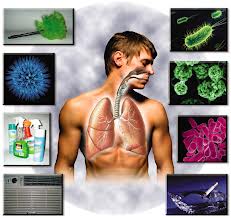
     What goes in and  gets trapped in our bodies? In the upper respiratory tract (nasal passages and pharynx) we find mold, spores, pollen, and dust mites. In the middle respiratory tract, (trachea and bronchi, aka lungs) We find smaller particles like bacteria, pet dander, small mold spores and dust. In the lower respiratory tract, (deepest part of our lungs) we find particles of 0.1 micron size. These are tobacco smoke, small bacteria and virus. Also microscopic outdoor dust particles. The bad news is, that the reaction of our body to these particles ranges from 'none' to 'extreme', like in the case of an asthma attack.
      So, the point is, the measure of the air cleaner's performance is the percentage of particles removed from the air. Only air cleaners designed to clean the air down to particles of 0.1 microns, and do it consistently, are the only type you should consider if you or your family suffers from allergies, asthma, etc. Standard furnace filters are flat, fibrous filters that are only designed to trap the very largest of particles. It's readily seen when you pull them out to change them. Really, in a sense, they are there to protect your furnace from dirt and debris, NOT to protect you and your loved ones.

     Next blog I will share information on HEPA filters, media filters, and other important health concerns. In the meantime read my other blogs at www.hvaccomfortguyjerry.blogspot.com or you can visit our website at www.greensheating.com.

Friday, August 9, 2013

Indoor Air Quality and You

     Air is absolutely essential for life. The problem is that the purity of the air is not assured. Outdoor air pollution is pretty obvious, but indoor pollution is not always so readily noticed. The impurities found in homes can build to levels that have a direct effect on our health and quality of life. One report from 2007,  based on independent testing of the air in 10,000 American homes across the country, that 96% had a least one type of indoor air quality or IAQ.
     What does this mean to you? When allergy problems send people to the doctor, invariably the patient asks about about air filtration. Patients want to know what they can do to reduce the pollutants in their homes. Many ask about air cleaners and doctors are telling them that air filtration should be part of their comprehensive health strategy.
     To help you understand about air filtration for your home, there are three approaches to improve air quality.  They involve, Source elimination, Ventilation, and Air Cleaning.
     Source Elimination is just as implied. Doing things in your home to reduce or remove the source of pollutants. Examples would be, not smoking indoors and removing animals, plants and solvents from your home.
     Ventilation is critical, especially in newer homes. New construction methods utilize energy efficient window and doors, extra caulking and weather stripping, along with more insulation. The problem created is, that tighter construction means decreased movement of outside air through the home. The lack of ventilation leads to a build up of stale and dirty air. According to the EPA, the lack of air movement throughout homes can lead to concentrations of pollutants up to a hundred times greater inside a home than outside.

     Air Cleaning by the use of filters and or whole house filtration systems are a vital part of the strategy in improving your overall health. These cleaners remove the particulate matter that remains AFTER source elimination, and ventilation have failed. Some whole house electronic air cleaners can capture particles as small as .01 microns. That is pollutants like influenza, and other bacteria. Because they are part of your heating and cooling system they clean the air in your entire home.
     As time goes on I will share more things about indoor air quality. You can read more of my blogs at www.hvaccomfortguyjerry.blogspot.com, or go to our website at www.greensheating.com.

Tuesday, August 6, 2013

There Are No Free Rides - Really!

     It is sad that we live in a time and economy that we are careful about every dollar we have and at the same time squander money by not being smart about our homes and appliances. A case in point is regarding Service Calls made at our request and then trying to figure out a way not to pay them. Yes, we do not want to pay more than we should, but we don't want to squander money on poor, or NO service.
    Recently we had two experiences here in Boise that demonstrate peoples total lack of regard for a company. THEY, the home owner, called to have a service tech come out and diagnose what was wrong with their air conditioner and why it wasn't cooling.

     In one instance, the problem was a simple wiring issue, that the tech fixed. The company charged the homeowner for a service/diagnostic call, and for a "level one" minor repair. The home owner was furious because he expected the tech to show him how to fix the problem himself, and because it took very little time to repair, didn't want to pay for the call.
     Come on folks! Who does not expect to pay for a Tech just to show up, let alone pay for the service rendered? Lets face it, the company the tech works for has to pay him, and has to pay for gas, a truck, wear and tear on the truck, Workman's Compensation insurance, uniforms, tools, and equipment to make the diagnosis and repair, plus, etc, etc,. There are no free rides, really!!  Everyone in the service industry has a  fee for a service call and that does not include a fee for the repair, no matter how minor. 

I know we live in tough times, but sometimes we have to bite the bullet and have a professional service tech to our homes for repairs of all descriptions. Personally, @comfortguyjerry has had service men come out to repair my clothes dryer, my garage door, my sprinkler system, my refrigerator, and by the way, we chose not to repair the refrigerator but I still had to pay for the service call of $89.00. That's just the way it is in the real world. Read more of my blogs at www.hvaccomforguyjerry.blogspot.com.

Monday, July 29, 2013

Breathe Easy With Clean Air At Home

     More and more we are hearing about the importance of clean air in our homes. Part of the work of the Environmental Protection Agency (EPA) is to promote and insure clean air in our homes, cities, and states. It is a well known fact that often there are more pollutants IN our homes, than those outside our homes. It is also well known that millions of people suffer daily with asthma, pulmonary lung disease, allergies, hay fever, and reactions to mold, mildew and dust. What is a person to do to have clean air in their homes?

     We can't live in a bubble, so the best thing we can do is to first, eliminate as many of the products from our homes that cause irritation to our lungs. Things like perfumes, chemical cleaning compounds, pesticides, and the like. Even carpet can be a host home for many airborne allergens and dust. Personally, I like carpet. Living in the Boise, Treasure Valley of Idaho, carpet feels really nice on a cold winter morning. So for me, getting rid of my carpet is not going to work. In the summer we live outdoors as much as we do indoors so the doors are being opened and closed and that allows more pollutants into our home.
     What I can suggest, and what I am using, is a 'whole home' electronic air cleaner.
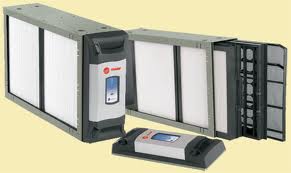
These units install right in the return air duct of your central heating and cooling system. There are some units on the market like, Trane CleanEffects, that will purify the air down to .01 microns. This will scrub the air of 99.98% of mold, mildew, influenza, allergens and the like.
     A good air purifier should be at least a three stage system, including a pre-filter that will pick up most dust, lint, pet hair, & etc. The second stage is usually the electronic part in which the atoms are changed to attract pollen and other allergens. The third stage generally consists of specially manufactured filter material that filter out the microscopic bacteria and dangerous influenza. At the same time as these filters are working, your system delivers clean, purified air to your home. A quality system like Trane CleanEffects does not require purchasing new filters for up to ten years. The filters can be vacuumed, washed, and replaced.
     Some folks like to use small portable air cleaners but, frankly, these do not perform as well as a whole house unit in delivering clean air. Plus, they are really only good for a single room or area. Others use what are called "HEPA" filters and 4" pleated filters in their furnace, and these are good, but again. they do not capture 99.98% of pollutants and they do not capture influenza virus. So, to breathe easy at home. To save money by not going to the doctor so much. To ease up on your purchase of over-the-counter allergy medication and perscription medication. Invest that saved money in a whole-home air cleaning system. For more information, check my other blogs at hvaccomfortguyjerry@blogspot.com or go to our website at www.greensheating.com.

What Size HVAC System Do I Need?

@comfortguyjerry had an interesting sales call this week here in the Boise, Idaho valley, and I thought it was important enough to blog about it. It has to do with the size, or tonnage of an air conditioning unit you need for your home.
     This gentleman, called our service center and wanted a quote on a 3 ton air conditioner. Immediately our receptionist put him on the phone with me and instead of just ball parking a price, not knowing the whole picture, I set up an appointment to go to his home.
     At his home I found out that several years ago his brother-in-law provided him a "refurbished" 3 ton A/C unit when his original unit went out. I ask him what the square footage of his house was. He told me 1300 square feet. Needless to say, a 3 ton unit was too big. He only needed a 2 ton unit, based on square footage only. I told him 3 ton was too big, due to the fact that the DUCT WORK in his house, when it was built, was sized for a 2 ton unit. Guess what? His current three ton unit was freezing up in the hot summer months and the house wouldn't stay cool. The rings in the compressor have warn out as well. The reason? Over sized A/C unit!  But he kept insisting he "wanted it cool!" this summer. He wanted a 3 ton unit!
     Why am I telling you all of this?  I hate to say it because I am a man, but men have this idea that more is better. You know, if one aspirin is good, then taking four aspirin must be better. "Bigger is better". "Heavier is better". Its a man thing.
      Here's the point. When you have a heating and cooling system, remember it is a 'system', not a air conditioner or a furnace. It is a complete system. That includes the outdoor unit, the furnace, the evaporator coil, the duct work, the return air ducts, and even the thermostat is important. They all have to work in concert with one another to achieve the desired results. For more information go to our website at www.greensheating.com.

Thursday, July 25, 2013

Clean Air and Heart Health

      Seventy percent of U.S. households are affected by allergies or asthma. These folks are more susceptible to harmful particles and allergens from the air INSIDE their homes. In fact, up to 72 trillion allergens find their way into your home every day. Add to that, if these family members have heart issues, the problems caused by unclean air are compounded.
     The EPA states, that exposure to fine particles impairs breathing, and increases the risk of stroke, heart attack and other serious health problems. Particles like dust, smoke and bacteria are often .3 microns in size or less. At that size allergens can get deep into your lungs because they aren't filtered well by your nose and throat.
    Many experts tell us that there is often more allergens and contaminants inside our homes then there are outside. Why is that? Well, today's homes are built better, tighter, and insulated better then in decades past. Now, this is a good thing, but it is also a bad thing, in the sense it traps particles, off gases, pet dander and the like inside our homes. We rely on a little one inch pleated filter in our furnace, or in some cases a four inch filter to clean our air. These filters are okay if you don't have health issues related to unclean air. What is the answer for those of us allergy sufferer's?
     According to the 2007 Consumer Digest report, Trane 'CleanEffects" whole home air cleaner is the highest rated professionally installed electrostatic precipatator on the market. "CleanEffects" has been shown to capture 99.98% of all airborne allergens, down to .1 microns in size. It will even capture influenza virus like the swine flu.
So, the irritants like hair, pollen, mold spores, skin flakes, bacteria, dust, tobacco and cooking smoke are scrubbed from the air.
     As published in the BioMed Central Journal, an independent publishing house committed to providing access to peer-reviewed biomedical research, and as accepted and presented at the Indoor Air conference, Trane "CleanEffects" has been shown to reduce triggers for allergies and asthma, and can be an important part of your overall allergy and asthma management plan." For more HVAC summer home tips read my blogs at hvaccomfortguyjerry@blogspot.com or see our website at www.greensheating.com.

Wednesday, July 10, 2013

Summer Energy Tips for Home and Business

Summer is here in the Treasure Valley of Idaho, and so is the heat. It will get to 100 degrees today and high 90's the rest of the week. When the temperatures rise, cooling can be the largest part of summer electric bills. The Idaho Power Company has provided these tips to help you be energy efficient.


FOR YOUR HOME
Adjust your thermostat up to 78 degrees, or use natural ventilation to cool during the night.
When practical, use your microwave or barbecue grill instead of your stove top or oven.
Use a clothesline or a clothes drying rack when possible. (Who knew)
Turn off fans when you leave the room. Fans cool people, not rooms.

FOR YOUR BUSINESS
Make sure your thermostat program direct digital control system is programmed properly.
Evaluate and replace outdated lighting.
Install occupancy sensors in all enclosed offices, small spaces and meeting rooms.

FOR BOTH HOME AND BUSINESS
Close your blinds on south-and west-facing windows during warm summer days to keep out un-wanted heat and reduce air conditioning use.
Tune up your HVAC system. Get you system serviced regularly and  replace air filters.

You can read more of my blogs at hvaccomfortguyjerry@blogspot.com or go our website at www.greensheating.com.   

Wednesday, July 3, 2013

Staying Cool in The Summer Without Air Conditioning

     Because I work for a heating and cooling company, you would think that my first inclination would be sell you a air conditioner to keep you cool and comfortable in the summer. The fact is, there may be many reasons why you may not be entertaining the idea of investing in a new air conditioner right now. That being said, what can you do to try to stay cool if you don't have an A/C or just would prefer not to turn it on?
 
  When I was growing up and living in northern California, we were doing good to have a 'swamp cooler' in our house and then we would only turn it on when it got to 110 degrees outside. Our house was old, poorly insulated, and had single pane windows. There are still a lot of houses like that in existence.
     Before you crank up the A/C or evaporating cooler, you may want to revisit some techniques that our grandparents used to keep cool. Here are some ideas to consider.
#1: Use windows to your advantage
     If you have windows that can be opened, do so whenever the outside air is cooler then the inside air. Don't just throw them all open. Remember, hot air rises, so create a natural draft by opening a downstairs window, like on the shady side of the house. Then, go upstairs and open a window on the sunny or hot side of the house. You can do the same thing even if you have a single story home. Here in the Boise, Idaho area, when it's cool in the morning I often open a living room window at the front of the house and then open a bathroom window near the back of the house, and that just creates a nice flow of fresh air.
     Once the outside air becomes hotter then the indoor air, then it is time to close and cover the windows before the hot air begins to move into the house. There are also a variety of fans you can use to draw the air to the upstairs, or install attic fans to remove the trapped hot air in your attic. It's nothing for the attic temperature to reach in excess of 200 degrees in the summer. Ceiling fans are also good to use to keep the air circulating. Fans run on electricity, but it is only a  fraction of what air conditioners use.
     Lastly, embrace summer. Enjoy it - don't fight it so hard. You could move any daytime activities to the coolest part of the house for the summer. You could move your sleeping quarters to a screened in porch on hot nights. When you get sticky hot, then soak in cool bath or shower. You could play with the kids in the kiddie pool or just soak your feet in a tub of cold water while you sip a cold refreshing beverage. The heat of summer is sometimes called natures way of telling us to 'slow down' our busy lives and enjoy those 'dog days of summer'. More ideas will blogged later. For more good reading go to my other blogs at hvaccomfortguyjerry@blogspot.com. For Air Conditioner information see our website at www.greensheating.com.

Thursday, June 27, 2013

Air Conditioner Preventive Maintenance - Rx for Longevity

     This morning I had a doctors appointment to see why I have been having shoulder pain, and It got me thinking about the importance of having health problems checked out by a medical professional. A doctor can evaluate the problem, do a diagnosis, and offer different types of treatment to restore our health. Sometimes it's a simple fix, other times it may involve extensive treatment or even surgery.
      Now, the question is; what does this have to do with my air conditioner, or my HVAC system? Well, think about it. We spend a pretty good chunk of money to invest in a heating and cooling system to keep us comfortable year round. We also hope that we can get some longevity out of that system, so we can feel we have made a 'healthy' investment in our home.
     We usually go once a year to get a physical for our own health and longevity, so, why not see the same importance for the longevity, and health of our air conditioner. Here in the Boise, Idaho area we are going to see temperatures reach 106 degrees in just a few days and that is going to make our air conditioners work overtime and put real strain on its 'heart', the compressor.
   During the 'house call', your HVAC 'doctor will do a physical inspection, run some 'tests' as to the health of the electronics, the 'brain', take the 'blood' pressure of the freon, running through the copper 'arteries' of the system. The 'doctor' will also clean out the system. If you are having problems, he will 'diagnose' the problem and write out a 'Rx' to bring your air conditioner back into a state of health. If something has broken or burned out, he most likely will perform 'surgery' to correct the defect so it can 'live' healthy for many years to come.
  This is why we should have a yearly 'physical' done on our A/C to make sure our system is healthy and operating at maximum efficiency. A yearly check up is really the 'Rx 'for making our A/C operate trouble free for many years.
Enjoy more of my blogs at hvaccomfortguyjerry@blogspot.com. Or visit our website at www.greensheating.com.

Wednesday, June 19, 2013

Save Energy with Proper Insulation

     Almost half of your electric bill goes to heat and cool your home. If you want to save money on your heating and cooling bill, then start by looking at your home insulation.

     Insulation is important to minimize, or eliminate the heat exchange/loss inside your house. Good insulation keeps the interior warm during the winter, and cold during the hot summer. A well insulated house allows your heating and cooling systems to effectively work as needed. The proper amount of insulation can save as much as 10% on your monthly electric bill.
   If your house has air leaks, or if it has insufficient insulation, air will pass through
 and heat exchange will be greater in areas where insulation is inadequate. This will result in heat loss and make your HVAC system run more, and use more energy. Even if your cooling in the summer, and their are leaks or poor insulation, the cool comfortable air will pass right out of the house. Many mobile homes and manufactured homes are perfect examples of this. Because of the style of construction, they have inadequate insulation in the walls and ceilings, so they fail to trap and keep the warm or cool air in the house.
     Make sure you consider factors such as building design, budget, local codes and climate when selecting the R-values of insulation material. Consider parts of your house such as the attic, floors, kitchen bathroom, windows, walls, doors, etc. If you are building a new home, check on some construction materials that provide both structural support and good insulation.
     Some utility companies offer incentives or rebates, to upgrade your insulation.  For more information, contact your local utility company to see what they offer.
     Be sure to read more of my home tips at hvaccomfortguyjerry@blogspot.com or go to our website at www.greensheating.com.
Thursday, June 6, 2013

What Matters Most In the Summer

It's good for us to stop for a minute and think seriously about our planet, and our use of it's resources. Slowly, we here in the western world are becoming more and more aware of our energy consumption, the waste we dispose of or recycle, and how we care for our small piece of the planet. Sometimes we think it is just too overwhelming for us to think about protecting the resources we have come to love and appreciate. So my suggestion is to start small, start in our own homes. If each of us would start there, our small differences would eventually make huge differences for our water, our atmosphere, our food, not to mention our health.
     Here in the Boise, Idaho area of the Treasure Valley, Idaho Power Company has outlined some things we can do to in our small corner of the world. Did you know that heating, air conditioning and water heating account for 46.7% of our energy consumption in the summer months? Our home appliances account for 13.6% of our energy consumption. So if we want to rein our summer electric bills, then we need to concentrate on the biggest pieces of the pie first.
     Questions we can ask ourselves:
        Are you using fans to stay cool and cooking outdoors when possible?
        Does your A/C filter need cleaning or replaced?
        Are the coils on your A/C unit dirty or clogged up?
        Can you adjust your Thermostat up or use natural ventilation to cool at night?
        Are you doing full loads of laundry and dishes, line drying your clothes if  
        possible.       
        Any incandescent that could be changed to compact fluorescent lights?
        Could you upgrade appliances or HVAC units to 'energy star' rated products?
        Do you have an extra refrigerator that could be recycled?
        Is your water heater temperature set at 120 degrees farienheit?
Most of the things I have listed from Idaho Power are fairly inexpensive to do or cost us nothing. It's just something we need to think about more often. You would think the power company would be interested in selling you MORE energy but in reality there is only so much energy to go around and so they are very much interested in our saving energy and I am sure all power companies are as well. I hope this blog causes all of us to think a bit more about our planet and to let you know that @comfortguyjerry is interested in more than just 'comfort'. For more information go to our website at www.greensheating.com.
     

Tuesday, June 4, 2013

Air Conditioners Vrs The Enviroment

     Let's face it. When it comes to air conditioning, most of us are more concerned about how cool we can be during the summer, than we are in it's impact on the environment.
You're probably saying, "impact on the environment?". When it's over 100 degrees outside, we could care less about the environment. And besides, what impact? It's only electricity after all.
     Well, many energy conservationist say that air conditioners result in up to 80% percent of co2 emissions released by power plants who produce the electricity to run the millions of air conditioners in residential and commercial applications.
During the hot summer months here Boise, Idaho our air conditioners are running full blast for a good portion of the day. That means a high consumption of energy during the summer. One of the easiest ways to lower that consumption is to use a programmable thermostat so you can control when it is running, and what temperature you want to maintain when your home and away.
     The next thing, is to consider is changing out your old air conditioner to a super high efficient model. Newer units require less energy to run, and some units offer two stage cooling that requires less energy. Most homes only  need 100% of cooling capacity for about 20% of the time. If you have a unit that is 15 years old, it may have started out as a 10 SEER rated A/C but they lose efficiency over time and so now it would be doing good to be rated at 7-8 SEER. Just moving up from 8 to 14 SEER your annual savings on your energy bill could be as much as 40%. That can help offset the initial cost of purchasing a higher efficient model. The newer units also use R10A refrigerant that has less impact on the ozone layer then the old R22 freon.
     Little things we can do are, keeping blinds and drapes closed during the hot part of the day. Using draperies that are lined with a heavy material to block out the suns heat. Installing ceiling fans to keep air circulating. Setting our thermostats a couple of degrees warmer or planting shade trees around our house, especially on the west side that gets the afternoon sun.
     For more energy saving ideas, read my other blogs at www.hvaccomfortguyjerry@blogspot.com or go to our website at www.greensheating.com.

Friday, May 31, 2013

Three Ways to Lower you A/C bills

So far, it has been kind of on the cool side here in the Boise, Idaho area. But, we who live here know it will soon be a "hot time in the old town". It's coming, and will be here before we know it. By next week we'll be in the 80's and we will be turning on the A/C to keep comfortable.
     Are you prepared? There are simple things we can do to keep our electric bill from running a muck this summer. Unlike central heating, which we can shut off, or at least turn down at night, air conditioning is often left on at night to keep us from sleeping too warm. So our A/C runs 12 to 18 hours a day and our electric meter keeps on a humming. What can you do?
      Sign Up For Energy Saving Programs
A lot of electric companies offer energy-saving programs that we sometimes don't think will mean that much, or we don't want to be bothered. Trust me. They help and are worth the time. Idaho Power Company has a device that is retrofitted to your central air system. It monitors the power usage and powers down the compressor at select times during they day and allows the fan to continue circulating the air in your home. You won't even know the difference, comfort wise. But your electric bill will.
     Use a Programmable Thermostat
It's really a simple way to save on energy consumption. Why keep your home cool during the day when you are at work and the kids are in school? Programing it to be off, or at least setting it so the A/C does not come on unless it reaches 80-85 degrees inside will really help. You can also set it so the A/C comes on an hour before you come home, so by the time you arrive the house is comfortable.
     Raise the Thermostat and Supplement With Fans
Raising the thermostat just a few degrees can make a big difference in your cooling bill. In many cases just turning you thermostat up from 72 to, say, 76-78 could save you over a $100! You are probably saying 76-78 is too warm, so now is where ceiling fans, or fans of any kind can be a real benefit. Even if the air is warm, it feels cooler when it is circulating. When the air from the fans reaches your body it cools the skin and we are more comfortable. Also if you wear lighter weight clothing, shorts, shirts, etc you will also add to your comfort.
Try these tips and see if it don't make a difference. Read more of my blogs at www.hvaccomfortguyjerry or go to our website at www.greensheating.com.

Wednesday, May 29, 2013

"Mini-Splits" Are Not A Small Banana Split!

     Now that I have your attention, I want to talk about electric ductless heat pumps and cooling systems. These are often called 'mini-splits' because there are actually two parts to the system. There is an outdoor unit or compressor, and a indoor unit that mounts on the wall that is the evaporator/fan blower. There is no duct work involved. The ductless heat pump can both, heat and cool your space. A cooling only option is available in ductless units also.
     In countries like Japan and China, upwards of 90% of homes use this kind of system, and have for decades. Central America uses them extensively in private homes and resorts. The U.S. Military uses them to cool the barracks and mess halls in Iraq and Afghanistan. It is just here in north America that we are slow to catch on to the idea.
     The most common question @comfortguyjerry gets regarding ductless heating and cooling is: "Will that one unit take care of my whole house?" The answer is, no. They are designed to provide comfort for a single space. That single space can be a 'great room', a bonus room or upstairs family room, room addition to a house, or a shop. It is also very effective for mobile or manufactured homes. I think you get the idea. To do an entire home would require additional outdoor units, and multiple indoor 'heads', depending on your needs and size of your home.
     You say, 'that sounds expnsive', and it can be, depending on what your needs are. The economy comes in during the monthly operation. They are so, so much more efficient, than traditional heating and cooling systems, and super high efficient central heating and cooling is expensive also. Ductless units are super quiet as well, being rated at just below a human whisper for many brands.
     Let me share with you what I mean by cost efficiency. In the Norhtwestern states of Idaho, Washington, and Oregon. To heat with a wood stove will cost $24.31 to produce a million BTU. A propane furnace will cost $57.45, a natural gas high efficiency furnace (95% efficient) will cost $14.73. A ductless heat pump, aka, mini-split, costs only $8.20 to produce that same million BTU, and no pollution to the atmosphere. You do the math. They will pay for themselves in no time.
     Think of it this way. Why turn on every light in the house when you need to use the bathroom? That's what you do every time your furnace or A/C come on. With ductless you only heat or cool the rooms that you need to, or use. I am also convinced that Mitsubishi makes one of the best ductless units on the market today. So the next time you hear the word "mini-split", don't start to salivate for ice cream and banana's.
For more information go to my website at www.greensheating.com.

Wednesday, May 22, 2013

Is A Heat Pump In Your Future?

     When you think of cooling your home, you probably think, "air conditioner", evaporating cooler (swamp cooler), or window fan. As it turns out, a heat pump can be a preferred way of cooling your home. Wait! "Heat to cool your home?? Well, that is a bit of misnomer. But a heat pump can both heat, and cool your home.
     In some parts of the country where the winter temperatures seldom get below 35 degrees, a heat pump is a great advantage because you won't need a separate back of heat source like a furnace or air handler. Where we live in the Boise, Idaho area, we still get some pretty cold mornings and we have to have a back up heat source, due to the fact that heat pumps began to lose efficiency at about 30 degrees. Once the outside temperature gets above 30 the furnace will seamlessly turn off and switch over to heat pump use.
     Let me explain how they work. I am going to focus on 'air source' heat pumps because, they are most commonly used in residential air conditioning, and they look exactly like an air conditioner. They use the ambient air temperature to heat. The operative word in heat pump; is the word pump. What makes them energy efficient is, that instead of 'making' heat, or 'making' cold air, They are in essence pumping, or transferring cold air out of your home in the winter, and replacing it with warm air. Moving air is more cost effective then manufacturing air. In the summer time, it reverses the process, moving hot air out of your home, and replacing it with cold air. It works much on the same principle as your refrigerator. Not to get too 'techy' on you, but, remember back when you were in school and they taught you in science that 'cold' is merely the absence of heat. and 'heat' is merely the absence of cold. That is basically the same principle heat pumps work on.
     So, why hasn't everyone switched to heat pumps. The reason is, that, in much of the united states we still get some very cold weather and a heat pump is not as efficient as a furnace in those areas. In most cases though, it is less expensive to run an electric heat pump than to run a gas furnace. It is staggering less expensive then propane or resistance heat! (baseboard, ceiling heat, or electric furnace) Overall they are a smart choice for many homeowners, and most heat pumps are energy star ratedThey also don't cost much more than an A/C unit. @comfortguyjerry has one at his home and we love it. My  natural gas usage the first winter we had it was cut in half! My electric bill went up slightly. I installed a 16 SEER heat pump and a 95% efficient furnace, and I know I am saving 25-30% on my overall heating and cooling bill. For more information on heat pumps go to our website at www.greensheating.com. Maybe a heat pump IS in your future.

Wednesday, May 15, 2013

Spring Clean Your Ductwork Now

As spring starts to roll around the country, people start thinking about spring cleaning. Yes, I know in some parts of the East and Southeast they just got hit with big snow storms, but trust me, spring like weather will soon be here. Usually spring cleaning includes cleaning floors, windows, cob webs, cleaning out closets and pantries. We even start cleaning up our yards and flower beds. We guys think about cleaning out the garage. But the area we overlook the most and should clean every five years or so is our DUCT WORK. We don't think about that because it is out of sight, out of mind. I am adding some pictures of some pretty bad duct work that is not all that uncommon.
I had my duct work cleaned a few weeks ago, and its only my wife and I that live in the house so I was quite surprised at how bad it was..
My advice is to get this done by a professional heating and cooling company or a company that specializes in duct work cleaning. The most thorough cleaning is called 'negative air' cleaning. It will vacuum and brush out everything thats not suppose to be in your duct work. Trust me, you do not want to be breathing air that has blown across that filth. Dirty ducts contain, microbes, dust mites, pet dander and just plain old dirt. Don't forget to have your clothes dryer vent cleaned. It is reported that about 3000 fires a year in the U.S.A are from clogged dryer vents. If you or your family suffer from allergies you know the importance of a clean home and the effort it takes to keep it clean. So be sure to include duct cleaning in your spring cleaning and enjoy the fresh air. This blog from @comfortguyjerry. For more information check our website at www.greensheating.com.

Monday, May 13, 2013

Tips For Saving Energy This Summer


     Summer has arrived it seems, in the Treasure Valley of Idaho. For we folks living in the Boise area, that generally means hot temps. and our energy bill will soon be on the rise. But, with a little preparation, we can reduce our energy bill substantially. I have three things you can do to get started. Now, some of these ideas are not "tre' chic", but, are you interested in saving money, or being fashion forward?
     The easiest, and cheapest, way  to save energy is by covering your windows. When the sun is hitting your windows in the morning or in the afternoon, close the blinds and curtains to block the sun from heating up your home. Light means heat. So, when the sun hits those windows it provides passive solar heat. If you are really wanting to save money and energy, you can take cardboard and cut it out to fit your window. You can cover one side with aluminum foil using glue, staples, etc. This will not only block the sun, but the foil will reflect it back away from your house. This is especially effective on windows that don't have a view to enjoy, or rooms that are seldom used, like guest rooms, and bonus rooms. I know, it's a bit 'red neck', but hey, comfortguyjerry is trying to save you money!
     The next tip is ceiling fans. They are a cheap way of keeping your house cool. Overall, they are pretty cost effective, but you have to remember to change the spin rotation direction. In summer the fan should turn clockwise, and in the winter, counter clockwise. If you need to purchase a ceiling fan, don't waste your money on a low end cheap model. They are usually nosier then high end fans. The last thing you need in the bedroom. Do your home work before you buy. I have a vaulted ceiling in my home, and the fan we have in the living area has been running nearly 24/7 for 14 years. I have it set on medium speed, so it moves the air without feeling drafty.
     The last tip is all about caulking and weather stripping. There are so many places, hundreds of them, where warm air can seep into your home through windows that are not caulked, and doors that have no weather stripping. Here is a test for your door weather stripping. Fold a sheet of copy paper in half and go outside of your front door, close the door, and try to slide the paper through the door between the jam, and the door itself. See how easy or difficult it is to slide the paper through the door.
     Time spent now summer proofing your home will save you money, plus reduce the amount of energy use, and will be kinder to the planet. For more information check our website at www.greensheating.com.

Thursday, May 2, 2013

The Most Important Day In The Life of Your HVAC System

     The single most important day in the life of your furnace or air conditioner, is the DAY IT'S INSTALLED. That may seem to you like a strange statement. My blog today is designed to explain why that is true. Simply stated, you can purchase the most expensive, highest efficiency, top rated brand, and, if it is not installed correctly, then you will not get the service, or efficiency that you shelled out your hard earned money for.
     There are several factors that are involved in having a properly installed HVAC system. First and foremost is the importance of purchasing a matched system. That means, the furnace, condensing coil, and air conditioner (or heat pump) should be the same brand. You will also find that there are a number of condensing coils to chose from to match up with the air conditioner, and your HVAC company should and can do a correct match in order to give you the highest efficiency possible.
     The next factor is duct work size. To deliver the correct amount of air to your home the duct work has to be sized properly in proportion to the cfm's (cubic feet per minute) coming from the blower motor in the furnace. To give you an example: Let's say your duct work is sized to handle air movement from a 3 ton blower motor but your blower motor is a 4 or 5 ton blower. Obviously you are going to get back pressure because your duct work cannot deliver that much air efficiently. The opposite of that is true as well. If you have duct work designed to deliver air from a 4 ton blower and your furnace only has a 2 ton blower, then it is going to have a hard time warming or cooling your home. In either case, it will cause increased wear and tear, and shorten the life of your equipment.
     The last factor I will mention is the importance of the correct refrigerant charge. That means too much Freon, or too little Freon in your A/C will also be a problem for your system.
     The North Carolina Alternative Energy Corporation, which is a non-profit organization, examined air conditioning manufactures' efficiencies, versus the actual efficiencies that resulted after installation. They found that 90% of the units tested exhibited some sort of energy-wasting, comfort-robbing problem! What were they? 54% had a incorrect refrigerant charge. 70% had incorrect air flow, 93% had duct leakage, 47% of the units were over sized for the home. So, the hope of @comfortguyjerry is to help you see the importance of hiring a quality company, with the a long standing reputation for doing the job right the first time. Remember, The most important day in the life of your HVAC system, is the day it is installed. Check our website at www.greensheating.com.